
Step Energy Harvester
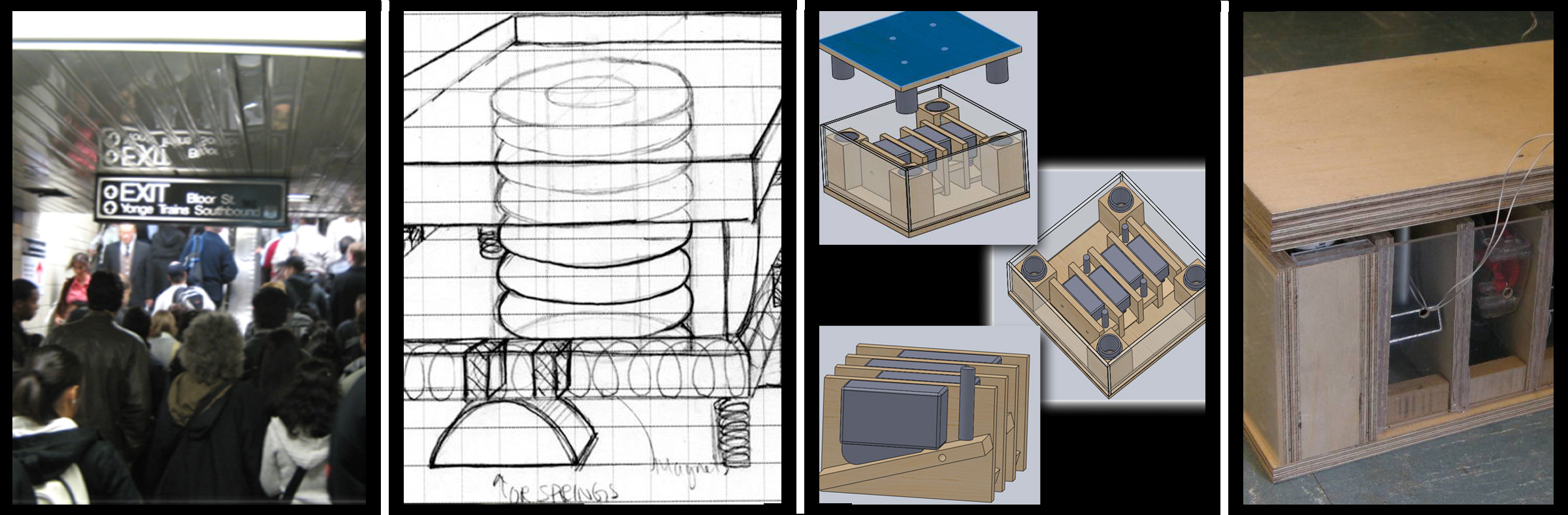
A project completed with Rabia Aslam, Tom Chu, Kevin Kwong, Yahya Remtulla, and Vanessa Yip.
Time Frame: May-August 2008
The Problem: A large number of people are traversing in and out of subway systems everyday. Their footsteps have the potential to generate a large amount of energy. How can we safely and efficiently harvest that energy? Requirements:
- The product must meet electrical and safety standard
- The product is unnoticeable when stepped on
- The product is durable
- The product is easy to clean
- The product generates a sufficient amount of electricity to support an external application
- The product is self-sustained in terms of electricity usage
Concepts: A number of concepts were generated for a potential solution to the problem. The following are sketches of some of the concepts that were considered for the final prototype.

These would be installed onto the overhanging bars and ceiling of subways or buses. The release of the handles exert an upward force, similar to a force released after a tension spring has been stretched, propels a magnet located in the center of the coils to oscillate, thereby inducing an electrical current to create electricity.
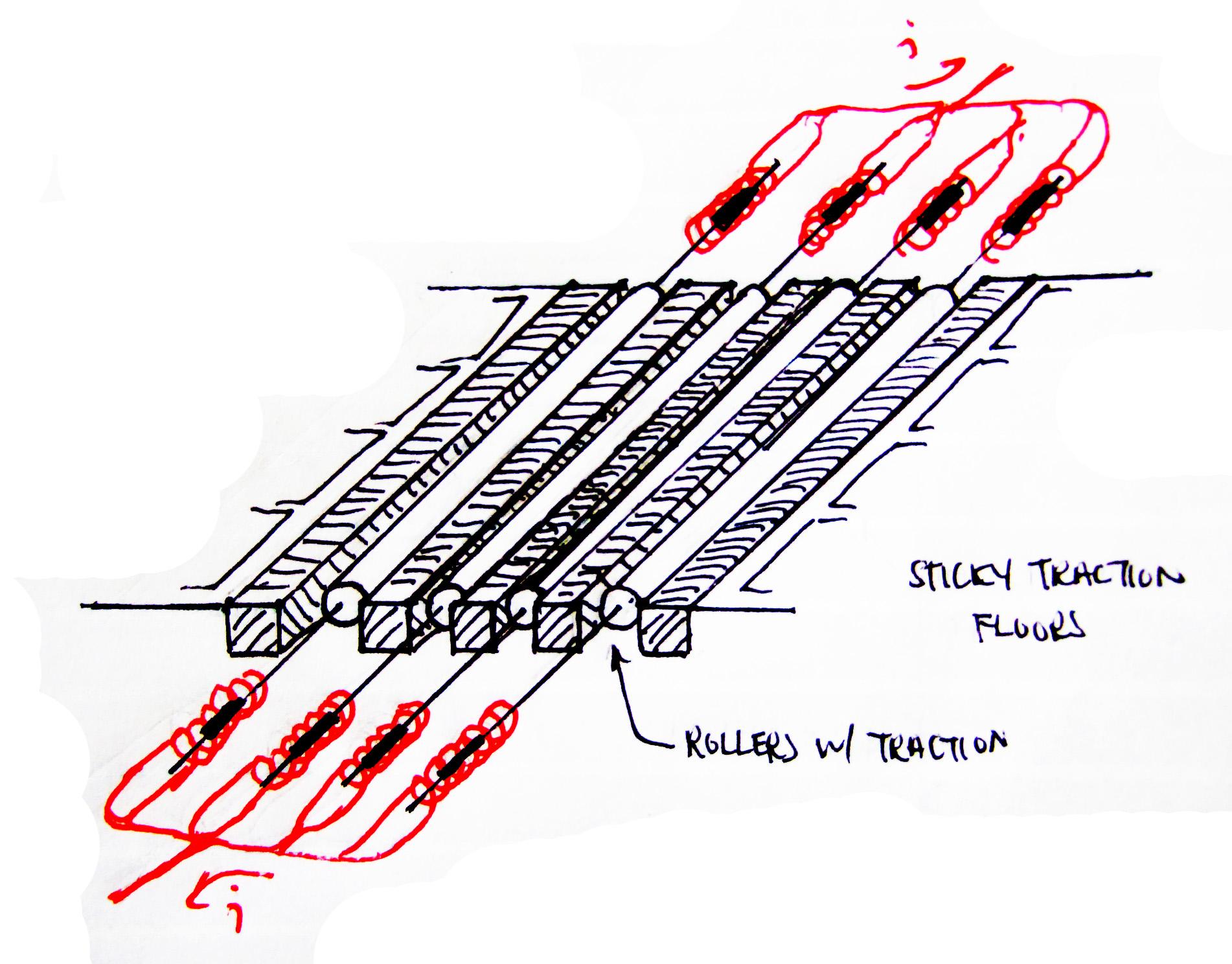
When people step across a floorboard, they cause the rollers inside the floorboards to start rolling. These rollers are connected to magnets that rotate to create a magnetic field around conducting coils, which create electricity.

This concept was designed to be implemented as a replacement for the current tiles in areas of high people traffic. When people step on the tile, the spring at the center would compress, and cause the teeth at the edges of the tile to push two of the four teeter-totters down. When these teeter totters are pushed, a magnet inside would slide up and down it’s the teeter-totter’s length; this would create a current through the conducting wires wrapped around the teeter-totters, thereby generating electricity.
The Prototype: The final design was decided through the use of a decision matrix that weighed the importance of each criteria. The final selection was chosen to be the Teeter-Totter Tiles. This decision was based mostly on the safety of the device and the amount of energy the device can generate. Because the T-T-Tile can be implemented in a safe manner, and can potentially generate more electricity than the other concepts, its concept was chosen to be the design.
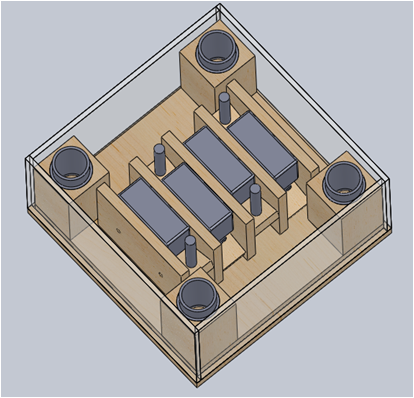
Inside each tile are four self-powering flashlights that are activated when the top of the tile is pressed down.

Pokers from the roof of the tile extend downwards and push the lever, which activate the self-powering flashlights. These flashlights were connected together and lead to a circuit that powered a series of LEDs to prove the concept.


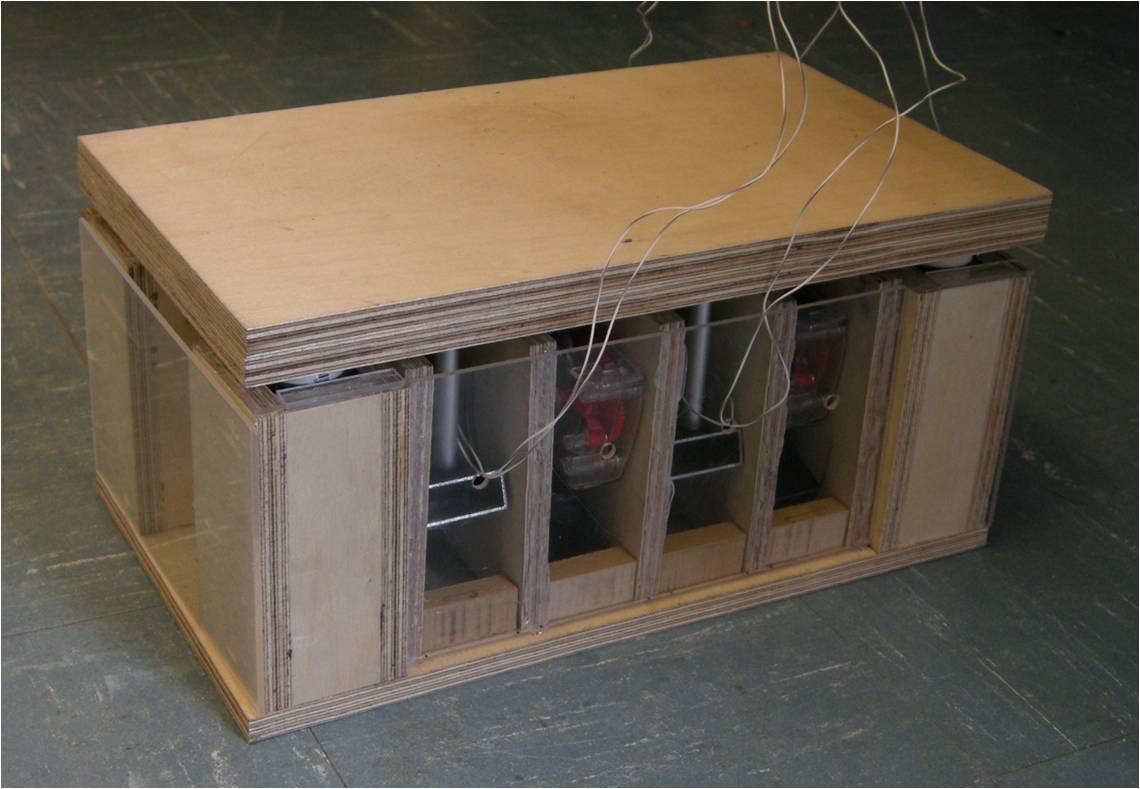
Finished Prototype with wires to LED output.
The Report
Final Design Report
 Yiling Wang